Five trends shaping philanthropy and what they mean for how we cultivate donors in the year ahead
From Victoria Mannoia, Associate Vice President Strategic Development
I recently sat down with major gift officers of nonprofits around the country. In our conversation, one thing became increasingly clear: fundraising growth will depend on how intentionally organizations identify, cultivate and move donors into deeper levels of engagement and generosity.
The consistent narrative we hear around the industry is “less donors, but more giving.” That party line hasn’t changed in the last 5+ years, so I am not going to believe it will relatively soon!
However, this presents a very unique opportunity for us to think differently about fundraising as we know it.
The strongest fundraising programs are built around the donor journey.
That means understanding where a donor is today, recognizing indicators of greater capacity or commitment and creating the right next opportunity for that donor to deepen their relationship with the organization.
At BDI, we have been increasingly focused on this idea of intentional donor movement.
Across the philanthropic landscape, several significant shifts are reinforcing the same strategic imperative: Rescue Missions need a more holistic and integrated view of their donors, their vision for a legacy of generosity and the ways generosity is changing.
Before we talk about fundraising, we have to have a clear picture of the world we and our donors are living in:
- Women are playing an increasingly influential role in philanthropy.
- The industry is preparing for the largest intergenerational transfer of wealth in history.
- High-capacity donors are carefully curating wise giving strategies.
- Asset gifts are becoming more advantageous to give.
From a philanthropic lens:
- Acquiring new donors continues to be an increasing expense
- Active donor counts remain in decline
- Major gifts continue to float organizations
All of this means organizations are being challenged to look more deliberately at the donors already on their file for opportunities to increase long-term value.
Taken together, these trends are signals that the organizations positioned for future growth will be those that understand their donors more deeply and build intentional pathways for generosity to grow.
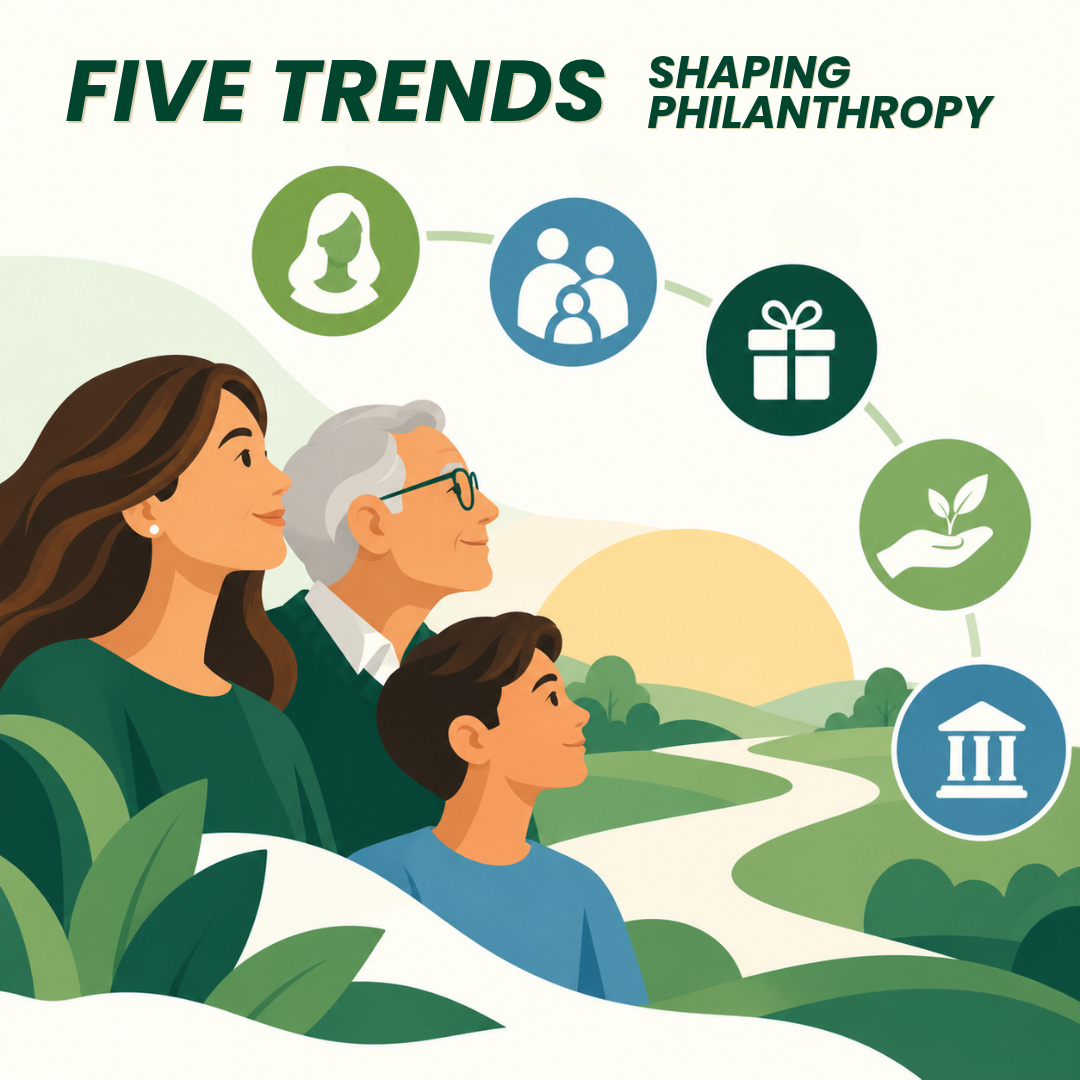
There are the five practices that will distinguish a fundraising program next year.
1. Pay Close Attention to Female Donors
Women are an increasingly important audience for nonprofit leaders to understand. According to recent data, 64% of charitable donations are made by women.
For Rescue Missions, this creates a clear strategic opportunity.
Programs serving women, children and families may provide particularly strong points of connection – from women’s recovery programs to shelter and services designed to help mothers and children rebuild their lives.
But the opportunity is broader than creating more women-focused appeals.
It is about recognizing women as influential philanthropic decision-makers and creating intentional pathways for them to engage more deeply with the Mission. That may mean inviting them into specific programs, giving them firsthand exposure to impact or identifying the areas of the organization that most closely align with their interests and values.
The more we understand the individual donor – what motivates them, what they care about and where they may be positioned to engage at a deeper level – the more effectively we can connect them with the right next opportunity.
2. Prepare for the Great Wealth Transfer by Building Multi-Generational Relationships
The Great Wealth Transfer represents one of the most significant shifts facing philanthropy.
It is projected that $124 trillion will transfer through 2048, with approximately $105 trillion expected to pass to heirs and $18 trillion expected to go to charity.
For nonprofits, the strategic question is not simply where that wealth will go.
It is whether the relationships that exist with today’s major donors will continue into the next generation.
Major donors may have a deep, longstanding connection to a Mission, but that relationship does not automatically transfer to their children or grandchildren. The next generation needs the opportunity to establish its own connection to the work.
That requires intentionality now.
Organizations should be creating meaningful opportunities for donors to bring their families into the Mission through events, volunteer experiences, tours, service opportunities and other points of engagement. The objective is not to preserve a family name on the donor file. It is to give each generation a reason to care personally about the Mission.
One of the most compelling insights I heard recently came from a panel of next-generation donors who described influencing their parents’ giving after developing their own connection to an organization or a specific area of its work.
That is an important distinction.
Preparing for the Great Wealth Transfer is not only about cultivating future heirs. It is about recognizing that children and grandchildren may already be influencing philanthropic decisions today.
The opportunity is to move from thinking about individual major donors to thinking about multigenerational donor relationships.
3. Assume Higher-Capacity Donors Already Have a Giving Strategy
As organizations identify new middle and major donor prospects within the current file, I believe we need to start with a different assumption:
We are not convincing these donors to be generous for the first time.
Many already have a giving strategy.
They may have specific causes they prioritize, advisors they work with and a defined philosophy for how they use their charitable resources.
Our role is to demonstrate why the Mission belongs within that strategy.
That should influence the language we use with these audiences.
Instead of approaching every conversation as another appeal for a gift, we can invite donors to consider an opportunity as part of their broader giving strategy.
That immediately changes the nature of the conversation.
We are no longer simply communicating an organizational need. We are making a case for investment.
Why does this opportunity matter? Why is the Mission uniquely equipped to respond? What measurable or meaningful impact can the donor help make possible? How does this opportunity align with the donor’s own priorities?
Higher-capacity donors are already making decisions about where their generosity can have the greatest impact.
Our job is to earn a place in that decision.
4. Cash is Not Always King
Higher-value donors do not necessarily hold or deploy their wealth in cash.
Their assets may be held in securities, retirement accounts, donor-advised funds and other investment vehicles. Their giving strategies may be intentionally structured around those assets for charitable and tax advantaged reasons.
Fundraising programs need to be prepared to meet donors here.
For example, donating long-term appreciated stock directly to charity can potentially help a donor avoid capital gains tax while still receiving a charitable deduction, subject to applicable tax rules.
Qualified charitable distributions can also allow eligible IRA owners to make distributions directly to qualified charities, and those distributions can satisfy all or part of a required minimum distribution when applicable.
Nonprofits should not attempt to serve as financial advisors. But we do need enough fluency in these giving vehicles to recognize when the traditional cash ask may not reflect how a high-capacity donor prefers to give.
That means reducing our dependence on a single form of giving and becoming more comfortable speaking the language of asset-based generosity.
It also means presenting opportunities in a way that respects the donor’s existing financial and philanthropic strategy.
“Give according to your giving strategy” is a stronger partnership posture than assuming every donor should respond to the same cash-based request.
The more sophisticated the donor relationship becomes, the more sophisticated our approach needs to become with it.
5. Mine the Mass-Market File
Another message that continues to surface across the industry is one nonprofits cannot afford to ignore:
The next major donor may not need to be acquired. They may need to be identified.
A donor’s current gift amount tells us what they gave at a particular moment. It does not necessarily tell us their capacity, their affinity for the organization or their potential for deeper partnership.
That is why organizations need an intentional strategy for analyzing and assessing the donors already on their file.
The goal should be to identify signals of greater capacity, commitment or readiness and then create a pathway that helps donors move into their best giving patterns.
For some, that may mean sustained giving. For others, it may mean middle donor cultivation, a major gift conversation or another deeper form of engagement.
This reinforces a fundamental principle behind BDI’s sustained giving work: sustained giving should not operate as an isolated program. It should function as part of a broader donor journey that intentionally strengthens relationships and moves donors toward deeper engagement and long-term value.
Acquisition remains essential. Healthy donor files require new people entering the organization.
But acquisition cannot replace the work of understanding the donors who are already there.
Before we assume the next major donor is somewhere outside the organization, we should know whether that donor is already sitting on the file.
Conclusion: Build for Donor Movement
When I look at these trends together, they point to the same conclusion:
The organizations positioned for future fundraising growth will be those that understand the whole donor relationship and intentionally build for movement.
See the woman whose philanthropic influence may be greater than her current giving history suggests.
See the children and grandchildren who could become personally invested in the Mission.
See the annual donor whose gift amount may not reflect their full capacity.
See the donor whose wealth may be held in assets rather than cash.
And then build a fundraising program that can respond appropriately.
Donors should not be confined to the categories we use to manage them internally. Your team should be asking, where is this donor today, and what is the most relevant next step in their relationship with the organization?
Mass-market fundraising, sustained giving, middle donor cultivation and major gifts should not function as disconnected programs. They should work together to identify opportunity, deepen relationships and move donors toward the giving pattern that best reflects their commitment, capacity and connection to the Mission.
As we prepare for the year ahead, the opportunity lies in building a fundraising program capable of recognizing generosity, cultivating it intentionally and helping it grow over time.
Stay updated on what’s next for nonprofit fundraising!
Sign up for our newsletter today to get the fuel that will help boost your fundraising for nonprofits to the next level.