
7 Important Signals for Nonprofit Leaders
For nonprofit leaders across the country, the landscape of generosity has become shifting sand beneath our feet. Donor expectations are evolving, traditional fundraising models are changing, and organizations are being challenged to think more strategically about how generosity is cultivated and stewarded.
For many years, nonprofits relied heavily on broad-based fundraising strategies that engaged large numbers of donors through mass appeals and transactional giving. Today, however, many organizations are seeing those models erode while sustainer programs; mid-level and major donors play an increasingly important role in long-term missional success. Going forward, we will only see this shift become more prominent, as essential strategies for nonprofit growth.
At BDI, we have been leading our partners through these shifts for some time – focused on the growing importance of cultivating deeper relationships with donors and building strategies around the donor lifecycle rather than one-time gifts.
As active members of The Giving Institute, BDI has access to their latest study, Impact Giving: The Future of Major Gifts. The research explores how major donors are approaching philanthropy today and what those changes mean for how nonprofits strategically engage their donors today.
In the sections that follow, we will explore four key trends emerging from this research, and I will share three strategic considerations for nonprofit leaders as they steward generosity in the years ahead.
Four Major Trends Shaping Donor Behavior
Trend #1: Impact Giving Is Becoming the Dominant Approach Among Major Donors
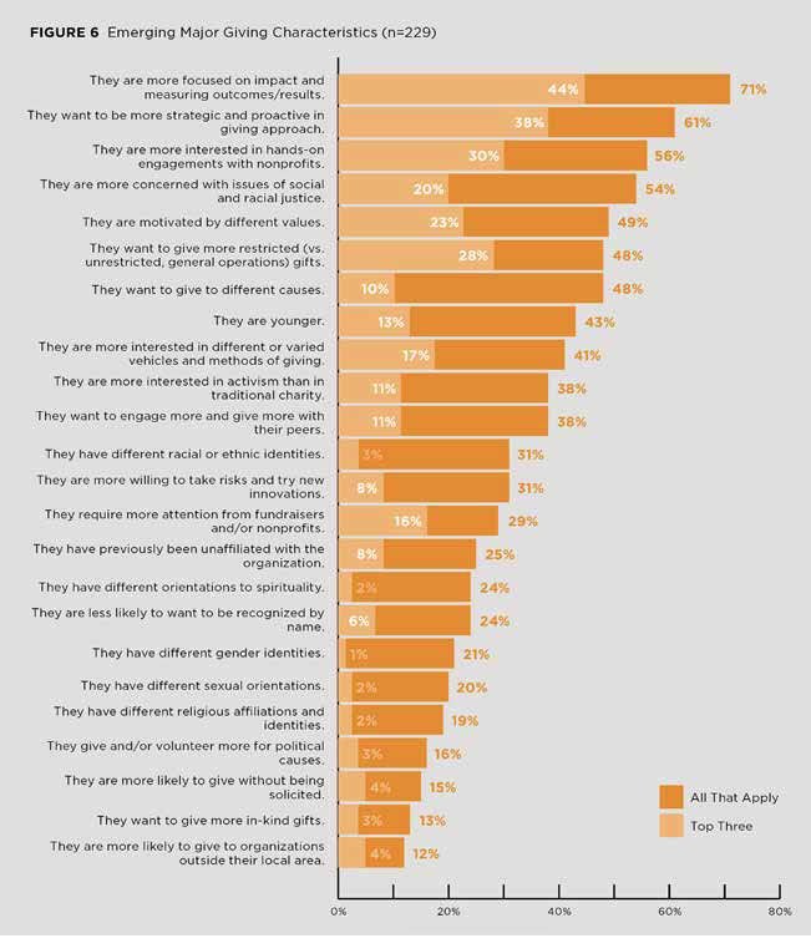
The study gathered insights from 229 frontline fundraisers most with decades of experience working directly with major donors. When asked to identify the most significant emerging characteristics of today’s major donors, three themes rose clearly to the top:
- Donors are more focused on measurable outcomes and results.
- They want to be strategic and proactive in their giving.
- They are increasingly interested in hands-on engagement with the organizations they support.
If you take only one insight away from this research, it should be this: major donors are increasingly approaching generosity with a different posture than they have in decades.
The report notes that 49% of fundraisers say donors today are motivated by different values than in the past, and 48% report that donors are increasingly giving to different causes. Donors are thinking more intentionally about where their resources go and they want to understand how their giving moves the mission forward.
The report calls this shift “impact giving.” In practical terms, it means donors are not simply responding to appeals. They are defining the impact they want to see in the world, and they are looking for trusted partners who can help deliver it. This shift mirrors the trend that BDI has shared around how giving has moved away from traditional 501(c)(3) organizations toward platforms like GoFundMe, where donors often feel their giving creates a more immediate and visible impact in someone’s life.
Trend #2: Donors Are Thinking More Like Investors
Several fundraisers in the study described how donors now think carefully about how their gifts will be used, what outcomes they will produce, and how progress will be measured along the way. One respondent even noted that this style of giving is becoming “akin to investing,” where donors expect clarity, strategy, and measurable returns in the form of impact.
This shift also means donors are asking for more information than ever before. Many fundraisers reported that major donors now expect greater access to data, program results, and detailed reporting on how funds are used. They want to see evidence that their generosity is producing meaningful outcomes in the communities and causes they care about (Figure 6).
In some cases, donors may even redirect their giving if they do not see clear evidence of impact. According to the study, “major donors who take this approach commit to making transformative gifts meant to ignite real change, and a sense of urgency for that change. However, they also want to be efficient, to be good stewards, and to not waste resources,”. While that expectation can feel challenging for nonprofit leaders, it also presents an opportunity. Organizations that can clearly demonstrate results and communicate them effectively will stand out in an increasingly competitive philanthropic environment.
Trend #3: Major Donors Want to Be Engaged Partners in the Mission
Hands-on engagement with nonprofits was identified as one of the three most prominent characteristics fundraisers now observe among major donors, alongside a focus on measurable outcomes and more strategic giving.
Frontline fundraisers reported that today’s donors often want opportunities to see programs firsthand, interact with leadership and staff, and better understand how the mission is advancing. In some cases, donors also want to contribute ideas, participate in conversations about strategy, or engage with other donors who share their passion for a cause.
One fundraiser in the study described this shift by saying donors want to “get their hands dirty” in the mission. In other words, they want to move beyond transactional philanthropy and experience the impact of their generosity more directly.
This does not mean donors are seeking control of nonprofit organizations. Rather, many donors want deeper partnership and transparency. They want to understand the problems being solved, learn alongside leaders and program staff, and witness the outcomes their generosity makes possible.
For nonprofit leaders, this shift requires thoughtful stewardship. Traditional recognition events and one-way communication are no longer enough. Increasingly, donors value opportunities such as site visits, small-group discussions, learning experiences, and collaborative conversations that allow them to better understand and contribute to the mission.
Trend #4: Generosity Is Alive and Well, But the Model of Giving Is Changing
While these shifts in donor behavior represent meaningful and important change, the report also offers an important reminder: the transformation happening in philanthropy is an evolution of generosity, not a collapse of generosity itself.
When fundraisers were asked how today’s major donors compare to those in the past, only 20% said they were “mostly the same, with minor differences,” and only 1% said donors were, “extremely similar” than in the past. What is similar is the underlying impulse to give, to help solve problems, strengthen communities, and support causes that matter, remains deeply rooted.
What has changed is how donors express that generosity.
Across the philanthropic landscape, many organizations are experiencing the erosion of traditional mass-donor fundraising models. At the same time, mid-level and major donors are playing an increasingly central role in sustaining nonprofit missions. These donors are more strategic, more engaged, and more focused on measurable outcomes than in previous generations.
This is precisely the shift many of us have been observing in the field for years. Donors still care deeply about mission. What they are asking for now is clearer impact, deeper partnership, and greater transparency about results.
For nonprofit leaders, this should be encouraging. The heart of philanthropy remains strong. But organizations must adapt how they communicate impact, how they steward relationships, and how they invite donors into meaningful partnership with the mission.
If these trends continue to shape the philanthropic landscape, nonprofit leaders must consider how their organizations adapt to steward generosity in this new environment.
Strategic Considerations for Nonprofit Leaders
Nonprofit Consideration #1: Listen Carefully to Donor Perspectives
The study shows that impact-oriented donors are not simply writing checks and stepping back. Many are thinking deeply about the causes they support and how those organizations can create meaningful change. They often bring professional expertise, personal experience, and thoughtful perspectives about how programs can achieve greater impact.
Frontline fundraisers in the study repeatedly emphasized the importance of listening with openness and humility. One respondent summarized it well: organizations should “listen politely and with open minds to donor ideas put forth in an appropriate way at an appropriate time.”
This does not mean nonprofit leaders must adopt every suggestion a donor makes. But it does mean creating space for donors to feel like they have a place to share their ideas. Donors want to know their voice matters and that their perspective is valued as part of a shared commitment to the mission.
For nonprofit leaders, this represents a subtle but important shift. The traditional model of fundraising often emphasized presenting needs and inviting support. Increasingly, effective fundraising requires two-way partnership, where donors are invited into thoughtful conversations about impact, strategy, and the future of the mission.
When donors feel heard and respected, relationships deepen. And those deeper relationships often become the foundation for the sustained generosity that fuels long-term mission impact.
Nonprofit Consideration #2: Communicate Impact More Clearly Than Ever
For many years, fundraising communications have focused primarily on describing their needs to donors. While communicating need will always remain important, today’s donors are also asking a second question: What difference is being made?
The research highlights a growing expectation among donors for clearer reporting on outcomes and progress. Fundraisers noted that donors today often want access to more information about how programs are working, what measurable results are being achieved, and how their generosity contributes to real change.
One recommendation from the study captures this shift well: organizations should move toward “narrowcasting, not broadcasting.” Rather than sending broad messages to large audiences, nonprofits can strengthen engagement by sharing targeted updates that demonstrate specific outcomes and impact.
This might take the form of short impact reports, program updates, or stories that illustrate how generosity is transforming lives in tangible ways. These communications do more than inform donors. They help donors see themselves as partners in the work and understand the role their support plays in advancing the mission.
For nonprofit leaders, this represents an opportunity to build deeper trust with donors. When organizations communicate results with clarity and transparency, they reinforce confidence that resources are being stewarded wisely and that generosity is producing meaningful outcomes.
Nonprofit Consideration #3: Create Meaningful Opportunities for Donor Engagement
As donors become more impact-oriented, many are seeking opportunities to engage more directly with the missions they support.
The research suggests that traditional fundraising events and recognition programs still have value, but they are often no longer sufficient on their own. Many donors are increasingly interested in experiences that allow them to see the mission up close, understand how programs operate, and engage more deeply with the outcomes their generosity makes possible.
Fundraisers in the study highlighted the growing importance of opportunities such as site visits, educational gatherings, small-group conversations with leadership, and peer learning environments where donors can interact with others who share a passion for the cause.
In some cases, donors may also want to contribute their expertise in meaningful ways. This could include participation in advisory groups, short-term task forces, a community meeting, or committees aligned with their professional skills and interests. These opportunities allow donors to move beyond transactional giving and become more deeply connected to the mission.
Meaningful engagement does not mean handing over organizational decision-making, but rather creating opportunities for donors to learn, contribute ideas, and witness impact firsthand. When done well, these experiences deepen trust, strengthen relationships, and help donors feel genuinely connected to the work their generosity supports.
Conclusion: The Future of Philanthropy is Partnership
The findings from this study ultimately offer encouraging news for nonprofit leaders.
While donor behavior is evolving, the heart of generosity remains strong. Donors, at their core, still care deeply about solving problems, strengthening communities, and advancing causes that matter. What is changing is the way donors choose to engage with the missions they support.
Today’s major donors increasingly want to see measurable impact, participate more meaningfully in the work, and partner with organizations that demonstrate clarity of vision and effectiveness in execution. For nonprofit leaders, this represents both a challenge and an opportunity.
The organizations that will thrive in this environment are those that embrace deeper partnership with their donors and focus on the donor lifecycle rather than one-time asks. They will listen well, communicate impact clearly, and invite supporters into meaningful engagement with the mission that will ultimately uplevel their giving.
Let it be encouraging that the fundraisers who participated in this research expressed strong optimism about the future of philanthropy. Those who spend the most time working directly with donors were the most confident that the profession will continue to adapt and grow.
That confidence is well placed.
As nonprofit leaders, our responsibility is to understand how donor behavior is shifting today. We can then utilize that knowledge to steward generosity wisely, build authentic relationships with those who support the mission, and remain faithful to the communities we serve.
When we do that well, generosity is unleashed and grows, authentic relationships deepen, more lives are transformed, and ministry scales!
And that’s the whole point.
Persevere and press forward faithfully, Crusaders!
Stay updated on what’s next for nonprofit fundraising!
Sign up for our newsletter today to get the fuel that will help boost your fundraising for nonprofits to the next level.